The egg bridges Christian and Orthodox Easter
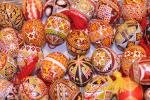
Dating back to 1054 A.D., a split in the Roman Catholic Church resulted in the birth of the Eastern Orthodox Church, which is based on the Julian calendar. That choice of calendars resulted in two annual Easters. This year, the first was April 1, 2018, the second, Orthodox, is April 8.
Adding to varying traditions are the customs of different countries. For example, eggs in pagan celebrations were the symbol of new life but in Christian celebrations they are representational of Jesus rising from the tomb and ascending into heaven. Various countries use different designs and techniques as well.
While the Poles call their decorated eggs pisanki, the Croatians say pisancia, and Ukrainians call theirs pysanky. But, regardless of what the decorated egg is called, they connect to ethnic traditions and family memories.
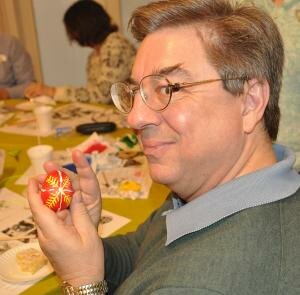
John Vishneski proudly displays the first egg he has ever decorated
Workshops
While it may be expected that the Orthodox and Christian egg decorating workshops have some differences in egg designs both the Polish Museum of America (PMA) (Christian) and the Ukrainian National Museum (UNM) (Orthodox) use similar tools and designs. They both also offer families and individuals an opportunity to create memories and experience a sense of self-satisfaction and pride.
John Vishneski, from Oak Park, admitted that though his and his wife Jane's son, Robert, had worked at the museum during high school and college, until this year's workshop, he had never decorated an egg. "It's really fun," he said smiling broadly.
Daughter Lissa proudly explained that she had been the one who had finally convinced the family to come back to the museum for the workshop.
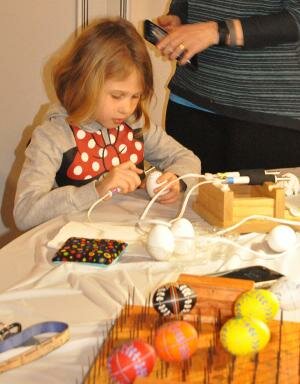
Zuzanna, age 7
More experienced than some of the adults is seven-year-old Zuzanna who handled the waxing tool like an adult as she focused on her design with total concentration.
With a combination of experience, talent and age, this year's class was one of PMA's largest. And that is exactly what PMA leaders are aiming at accomplishing.
"PMA prides itself on presenting our heritage to not just Poles but non-Poles. Our Christmas and Easter workshops show people and help them learn about Polish culture," explains Richard Owsiany, PMA President. "We have all the materials, information and good instructors. Seeing children so into it and experiencing an accomplishment in something they have never done, brings great joy to us."
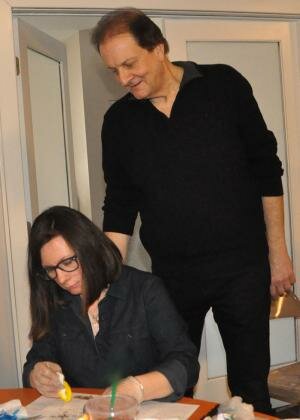
Richard Owsiany watches one of the students creating her design
Memories
"I remember the smell of the onion skins boiling. My dad didn't paint on the eggs. He stained them by boiling them in the onion skins. When they were dried, he'd etch intricate designs on them, "explained Owsiany. "I would sit watching him.
"We decorated eggs with my two boys when they were young, so I hope they do the same with the grandchildren."
Instructor gives tips
Christine Burd, the workshop instructor, said that this year she chose the design for the workshop from a Ukrainian design book. The technique she taught was that of batiking. Create the design on the egg with heated wax then dye it, repeating those two steps
In the end, the eggs surface is carefully heated and the wax is wiped off.
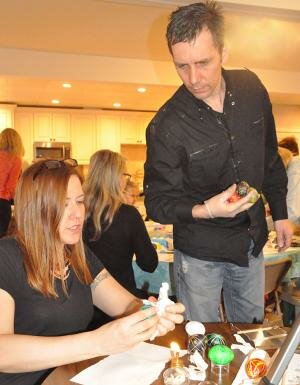
Christine Burd demonstrates removing the wax to a student
Orthodox or Christian, she recommends for all egg decorators:
- before dying, put eggs in a vinegar based bath, if you are using vinegar based dyes, so the shell takes colors better
- nothing will draw a straight line better than practice and patience
- don't be afraid to break an egg, that is a very natural and folkloric based. They are not meant to be perfect. It is handmade and that is what makes it beautiful
While Burd prefers to work with hollowed eggs she explains, some designers like the weight of the egg in the shell while decorating.
She makes a pin hole in the bottom of the egg then uses a small air pump to remove the white and yolk. Then she allows the egg to dry. She also points out that if you don't remove the egg contents, in the future that may crack and be very "smelly."
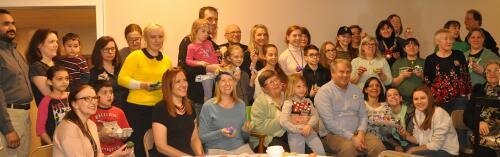
Most of the attendees at the 2018 Polish Museum of America psanki class
Future events
Whether decorating eggs, making ornaments or meandering through collections and whether Polish or Ukrainian, everyone in the West Town area and beyond has wonderful opportunities to learn about the cultures that helped shape our neighborhoods.
That learning is possible thanks to the dedication of the staff and supporters of both of these museum treasures. Polish Museum of America, 984 N. Milwaukee Ave. and Ukrainian National Museum, 2248 W. Superior.