Two of 10 most dangerous Chicago intersections on near northwest side: What do you think?
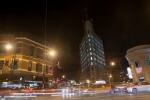
Milwaukee/North/Damen intersection at night by Andrew C. Miller
First on the Active Transportation Alliance (ATA) 10 top most dangerous pedestrian intersections list in the Chicago region is Milwaukee, North and Damen and the tenth is Elston, Western and Diversey. This announcement on Tuesday came the same day as a report from the U.S. Public Interest Research Group (PIRG) about driving trends.
ATA Statistics
ATA came up with their list by assembling crash data, staff feedback and more than 800 suggestions from the public. The statistics are:
- 2013: 29 pedestrian fatalities in Chicago; 21 so far in 2014
- 4,700 reported pedestrian crashes with 130 fatalities in Illinois in 2012
- 84% of crashes and 69% of pedestrian fatalities in Illinois occurred in metro Chicago
- In Chicago, pedestrian fatalities accounted for one-third of all traffic fatalities in 2012, compared to roughly 14% statewide
- 78% of all pedestrian crashes in Chicago occur within 125 feet of an intersection
- 80% of fatal and serious pedestrian crashes occurred within 125 feet of an intersection
- 40% of fatal pedestrian crashes in Chicago were hit-and-run, compared to 20%nationwide
- Although arterial streets account for only 10% of Chicago’s street miles, 50% of fatal/serious
- crashes occurred on them
- 15- to 18-year-old pedestrians had the highest crash rate
- 3 p.m. – 6 p.m. was the high crash time period, 6 p.m. – 9 p.m. was the second highest
- Older pedestrians were more likely to be struck in a crosswalk than other age groups
Local statistics do not support reported high incident claims for the Milwaukee, North and Damen intersection, according to 14th District Chicago Police Department Commander Francis Valadez.
What do you think can and should be done about these problem intersections in our area?
- Pedestrians do not follow walk "lanes" but cross diagonally, often swarming around turning vehicles
- Drivers blowing through the intersection on the red light
- Cyclists rolling (often at a high speed) through an intersection where traffic in their lane is stopped by a red light
- Other experiences? Please share.
Driving trends
After 60 years of a steady increase in miles driven in America, the average has been falling. Young people are driving less, taking public trans, biking and walking in urban settings where that is possible.
Between 1996 and 2010, the percentage of high school seniors with a driver's license declined from 85 to 73 percent, according to the AAA Foundation for Highway Safety.
As stated in the PIRG report, surveys and results point to other factors in the decline of millenials (born between 1983 and 2000) interests in driving that include: "socioeconomic shifts, changes in consumer preferences, technological changes, efforts by state governments and colleges to limit youth driving, and more."
This generation is the largest and is making their needs for transportation particularly important. PIRG extrapolates: "If Millennials drive fewer miles than previous generations as they age – and if future generations of young people follow suit – America will have an opportunity to reap the benefits of slower growth in driving. These include reduced traffic congestion, fewer deaths and injuries on the roads, reduced expenditures for highway construction and repair, and less pollution of our air and climate."
Based on that, they advise that "Now is the time for the nation’s transportation policies to acknowledge, accommodate and support Millennials’ demands for a greater array of transportation choices."
On the other hand, the report finds that Americans drive the same total amount as they did in 2005. Yet the number of transit riders, bikers and walkers increased.